The Search for Dark Matter: A New Era of Cosmic Discovery
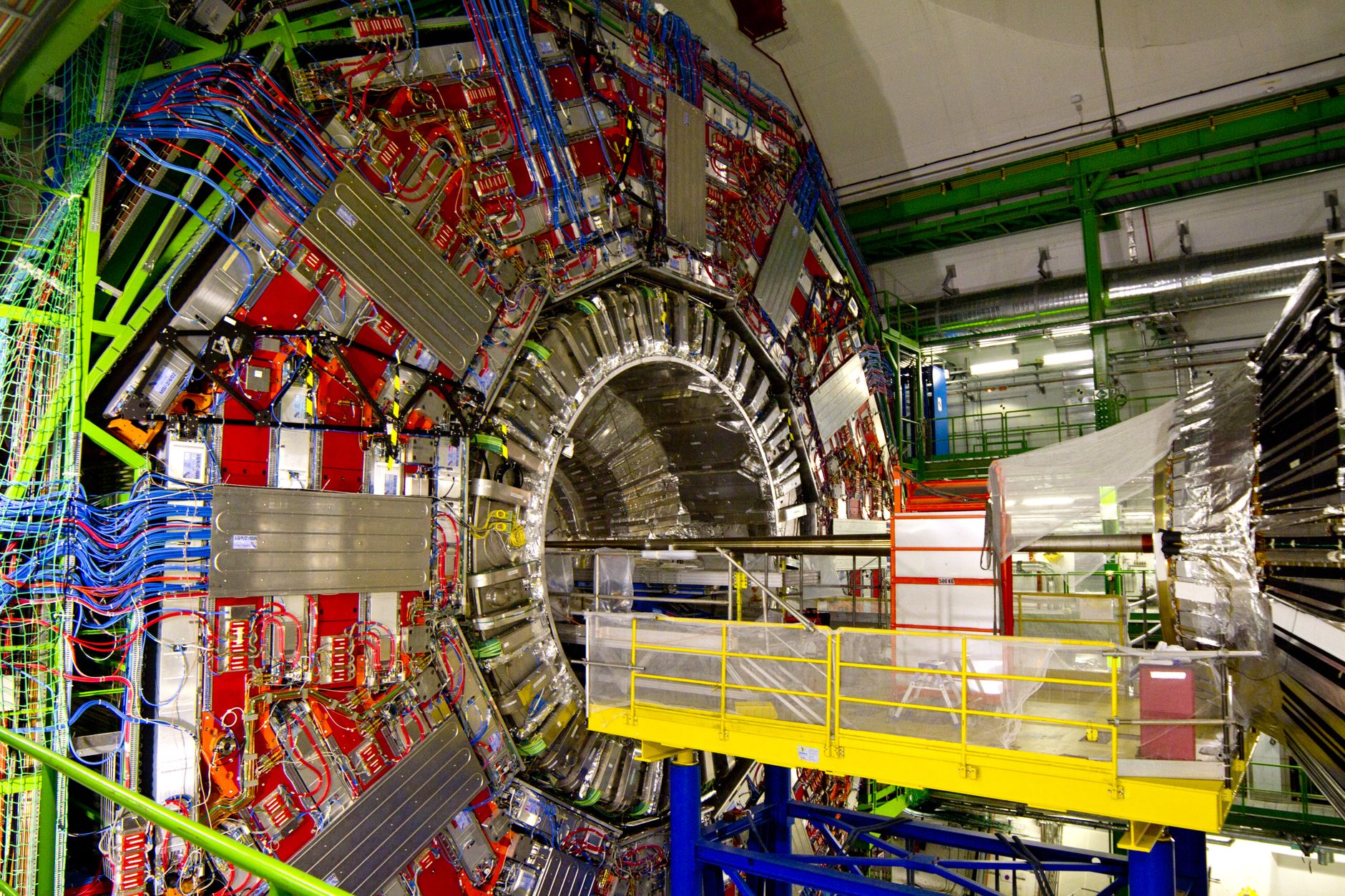
The quest to understand dark matter has taken a significant turn, with groundbreaking experiments underway beneath ancient mountain ranges and deep underground mines. This elusive substance, which makes up about 27% of the universe yet remains invisible and undetected, has long confounded physicists and astronomers alike. Recent advancements in detection technology and innovative methods are now opening new pathways in the search for dark matter, promising to shed light on one of the greatest mysteries of the cosmos.
Key Takeaways
- New experiments utilizing massive detectors filled with liquid xenon are being constructed in various locations, including a South Dakota mine, to search for dark matter.
- These detectors aim to achieve the first direct detections of dark matter, challenging our current understanding of particle physics.
- As scientists explore new theoretical frameworks around dark matter, the implications may extend far beyond astrophysics into fundamental physics.
- Collaboration and technological advancements are key in reshaping the approaches taken in dark matter searches.
- The ongoing research holds potential not just for identifying dark matter, but also for addressing larger questions about the universe's structure and origin.
The Current State of Dark Matter Research
Dark matter is a cornerstone of modern cosmology. Although it cannot be observed directly, its presence is inferred from gravitational effects on visible matter. For decades, scientists have proposed various candidates for dark matter, with Weakly Interacting Massive Particles (WIMPs) being the most popular. However, multiple experiments have failed to conclusively detect these particles, leading many to reconsider the theoretical frameworks surrounding dark matter.
In recent years, the scientific community has taken a renewed interest in detecting dark matter through innovative methods. Massive detectors filled with liquid xenon, such as the ones being placed deep beneath the Apennine Mountains and the Jinping Mountains, are at the forefront of this research. These locations were chosen specifically for their geological stability, which minimizes interference from cosmic rays and other environmental noise. Such conditions are crucial for enhancing the sensitivity of detectors, as even the faintest signals from dark matter interactions can be masked by background radiation.
The methods employed in these experiments aim to capture potential interactions between dark matter particles and the xenon nuclei. When a dark matter particle collides with a xenon atom, it may produce a detectable signal, usually in the form of light or heat. The challenge lies in distinguishing these signals from the myriad of other interactions that could occur in such a detector.
Why This Matters
The implications of successfully detecting dark matter extend beyond mere academic curiosity. Understanding dark matter is key to unlocking the mysteries of the universe's structure, formation, and evolution. It plays a critical role in models of large-scale structure formation, influencing how galaxies and clusters of galaxies form and interact over cosmic time scales.
Moreover, the pursuit of dark matter has catalyzed advancements in technology and experimental techniques. The detectors being developed for dark matter searches have applications beyond astrophysics, including in fields such as particle physics and nuclear security. The challenges faced in isolating dark matter signals have driven innovation in materials science, sensor technology, and data analysis methods.
As the search for dark matter continues, the potential for discovering new physics cannot be overstated. A successful detection could lead to a paradigm shift in our understanding of the fundamental forces and particles that constitute our universe. It might also provide insights into the mysterious nature of dark energy, which is believed to accelerate the expansion of the universe, and potentially unify the theories of gravitation and quantum mechanics.
Background and Context
The concept of dark matter emerged in the early 20th century when astronomers like Fritz Zwicky began to notice discrepancies in the motion of galaxies within clusters. The visible matter, such as stars and gas, fell short of accounting for the gravitational forces required to hold these galaxies together. This observation led to the postulation of an unseen form of matter that does not emit or absorb light, hence the term 'dark'.
Over the decades, various candidates for dark matter have been proposed, with WIMPs being the most discussed. These particles are predicted by supersymmetry, a theoretical framework that extends the Standard Model of particle physics. Despite numerous attempts to detect WIMPs through a range of experiments, including underground laboratories and particle accelerators, the results have been inconclusive, prompting the scientific community to explore alternative models and detection methods.
Expert Analysis
As we stand on the brink of potentially groundbreaking discoveries, it is essential to assess the broader implications of these new dark matter detection methods. The reliance on liquid xenon detectors marks a strategic shift towards utilizing advanced materials that offer the sensitivity needed to detect rare interactions. Liquid xenon, with its excellent scintillation properties, serves as an ideal medium for capturing potential dark matter signals.
Furthermore, the collaborative nature of these experiments highlights a significant trend in contemporary scientific research. The convergence of expertise from astrophysics, particle physics, and engineering is fostering interdisciplinary approaches that are essential in tackling the complexities of detecting dark matter. This collaboration not only enriches the scientific discourse but also accelerates technological innovation.
Additionally, the exploration of non-WIMP dark matter candidates is gaining traction. Models such as axions and sterile neutrinos are being considered, expanding the framework of possibilities. If successful, these alternative approaches could redefine our understanding of the universe and its composition, potentially leading to new physics beyond the Standard Model.
What This Means for Researchers and Enthusiasts
For researchers, the advancements in dark matter detection present both opportunities and challenges. The ongoing experiments promise to yield critical data that could either confirm existing theories or catalyze the development of new models. The scientific community must remain agile, adapting to new findings and revising theoretical frameworks as necessary.
For enthusiasts and the general public, the excitement surrounding these experiments represents a unique opportunity to engage with cutting-edge science. As the search for dark matter progresses, there will likely be developments in public outreach and educational initiatives aimed at demystifying the science behind dark matter and its significance for our understanding of the cosmos.
Frequently Asked Questions
What is dark matter, and why is it important?
Dark matter is an invisible substance that makes up about 27% of the universe's mass-energy content. Its presence is inferred from gravitational effects on visible matter. Understanding dark matter is crucial for comprehending the universe's structure, formation, and evolution.
How are scientists trying to detect dark matter?
Scientists are using massive detectors filled with liquid xenon, placed deep underground to minimize interference from cosmic rays and other environmental noise. These detectors aim to capture potential interactions between dark matter particles and xenon nuclei.
What are the implications of detecting dark matter?
Detecting dark matter could lead to significant advancements in our understanding of fundamental physics, as well as influence models of galaxy formation and expansion. It may also prompt a re-evaluation of established theories in particle physics.
Are there alternative theories to dark matter?
Yes, researchers are exploring various candidates for dark matter, including axions and sterile neutrinos. As experiments progress, new theoretical frameworks may emerge, challenging our current understanding of the universe.
The Road Ahead
The search for dark matter is entering a pivotal phase, with new technologies and methodologies paving the way for potential discoveries that could alter our comprehension of the universe. As these experiments progress, the scientific community must remain vigilant and adaptable, ready to embrace findings that may challenge long-held beliefs.
Looking forward, the collaboration between physicists, engineers, and theorists will be crucial in refining detection methods and interpreting results. The lessons learned from these endeavors could extend beyond dark matter, informing a range of scientific domains. As we delve deeper into the cosmic hunt for dark matter, the excitement builds, promising insights into the very fabric of reality itself.