SpaceX's Bold Bet on AI: Insights from Andreessen's David George
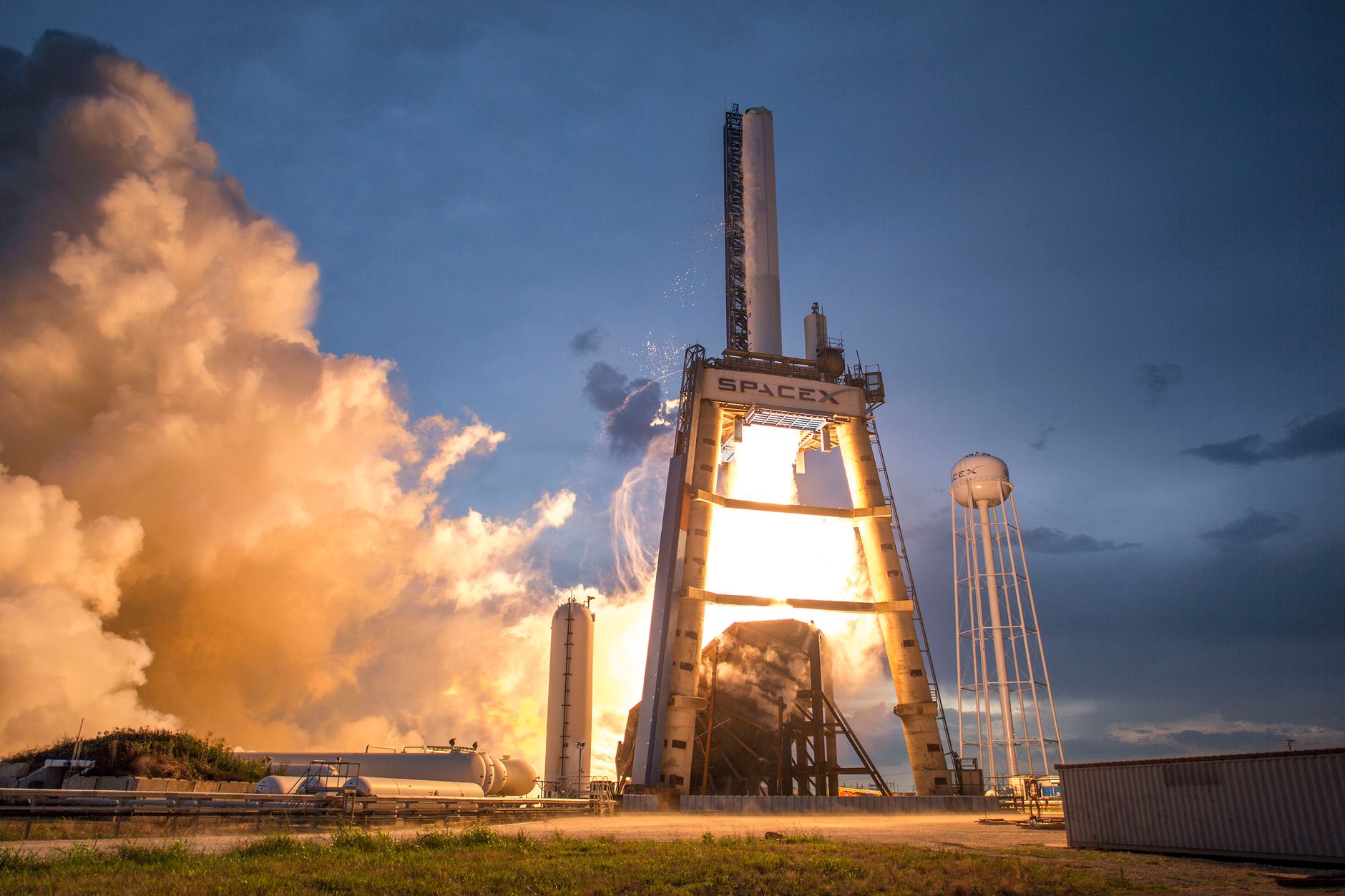
As artificial intelligence continues to revolutionize various sectors, the conversation is now turning towards its application in space. David George, a general partner at Andreessen Horowitz, has raised intriguing possibilities regarding SpaceX's plans in this domain. The intersection of AI and space travel could unlock unprecedented advancements, and George's insights provide a glimpse into what we might expect.
Key Takeaways
- David George highlights SpaceX's potential in AI computing capacity, suggesting a significant future role in space.
- Investments in AI technologies are becoming critical as the space industry evolves.
- The integration of AI into space missions could optimize data processing, resource management, and autonomous navigation.
- George's comments reflect a growing trend of AI's influence across all high-tech sectors, including aerospace.
- Future developments could see AI playing a pivotal role in space exploration, satellite management, and interplanetary communication.
What Happened?
In a recent discussion on Bloomberg Technology, David George, a notable figure in venture capital and an early investor in SpaceX, emphasized the company's unique position to capitalize on advancements in artificial intelligence. He articulated that SpaceX is not just a leader in space transportation but is also on the brink of becoming a powerhouse in AI computing capacity, particularly in the context of space applications.
George's remarks come at a time when the space industry is experiencing unprecedented growth, driven by private investment and technological advancements. SpaceX, founded by Elon Musk, has successfully launched numerous missions, including satellite deployments and crewed flights to the International Space Station. The company’s move towards harnessing AI aligns with broader trends in the tech industry, where companies are increasingly looking to integrate AI to enhance operational efficiencies and capabilities.
Why This Matters
SpaceX’s potential for AI integration is significant for several reasons. Firstly, the capability to process and analyze data in real-time aboard spacecraft could revolutionize how missions are conducted. AI can enhance decision-making processes, enabling spacecraft to adapt to unforeseen challenges autonomously. This is particularly critical in deep space missions where real-time human intervention is not feasible due to communication delays.
Furthermore, George’s insights reflect a broader industry trend where AI is becoming indispensable across various sectors, not just in traditional tech fields. As companies like SpaceX pioneer the use of AI in space, they set standards that could influence other industries. This creates a ripple effect, encouraging more companies to invest in AI technologies, thereby accelerating innovation in various fields.
Background and Context
The integration of AI into space missions is not a new concept, but it is gaining momentum as technology evolves. Historically, space missions relied heavily on pre-programmed instructions and remote control from Earth. The limitations of this approach became apparent during complex missions where real-time data analysis was necessary. For instance, during the Mars Rover missions, delays in communication inhibited the ability to respond to dynamic situations.
As AI technologies advance, the potential for self-learning algorithms and machine learning models to operate autonomously in space becomes more feasible. SpaceX’s vision appears to be ahead of the curve, suggesting that they are not merely looking to improve existing technologies but are also considering how AI can fundamentally change the architecture of space exploration.
Expert Analysis
David George’s perspective on SpaceX’s capabilities highlights a crucial aspect of future space exploration: the need for greater autonomy in spacecraft operations. Currently, many space missions are hindered by the reliance on ground control for navigation and decision-making. AI can bridge this gap by enabling spacecraft to perform complex analyses and make decisions in real-time based on environmental data.
For example, consider the potential for AI to optimize resource management on long-duration missions. AI could manage life support systems, monitor crew health, and even control agricultural systems for food production in space. This type of autonomous management is essential for missions to Mars or beyond, where resupply options are limited. Furthermore, AI can enhance the efficiency of satellite operations, managing the constellation of satellites for communication or Earth observation by predicting and responding to failures in real-time.
What This Means for the Space Industry
The implications of integrating AI into space missions extend far beyond operational efficiencies. For the space industry, this means a shift towards a more resilient and adaptive approach to exploration. As AI technologies become more integrated, the industry will likely see a decrease in mission costs and an increase in successful mission outcomes.
Moreover, the investment in AI by companies like SpaceX could attract further capital into the aerospace sector. Venture capitalists and tech investors may be more inclined to fund projects that demonstrate a clear use of AI, driving innovation and competition in the market. This could lead to new startups emerging in the AI-space intersection, fostering a vibrant ecosystem that enhances technological advancements.
Frequently Asked Questions
What specific AI technologies is SpaceX likely to use?
SpaceX may leverage machine learning algorithms for data analysis, autonomous navigation systems, and predictive maintenance tools to enhance spacecraft operations and prolong mission lifespans.
How could AI impact astronaut safety during missions?
AI can monitor astronaut health in real-time, analyze environmental conditions, and make decisions to ensure safety. It can also assist in life support management, reducing risks associated with human error.
Will other companies follow SpaceX's lead in integrating AI?
Yes, as the success of AI applications in space becomes evident, other aerospace companies are likely to adopt similar technologies to remain competitive and improve mission outcomes.
What role could AI play in future Mars missions?
AI could manage life support systems, optimize resource use, assist in navigation, and even facilitate scientific research by analyzing data collected on Mars.
The Road Ahead
The future of AI in space promises to be transformative. As SpaceX and other companies explore the integration of AI technologies, we can expect to see significant advancements in how missions are conducted. The potential for AI to enhance autonomous operations will not only improve mission success rates but also reduce costs, enabling more frequent and ambitious exploration missions.
As we look ahead, the collaboration between AI and space exploration will likely lay the groundwork for the next era of human activities beyond Earth. From autonomous spacecraft to AI-managed habitats on Mars, the possibilities are endless. The excitement surrounding these developments is palpable, and as investors like Andreessen Horowitz back such initiatives, the space industry is set for a revolution that could redefine humanity’s relationship with the cosmos.